



Typhoid fever duration: What you should know
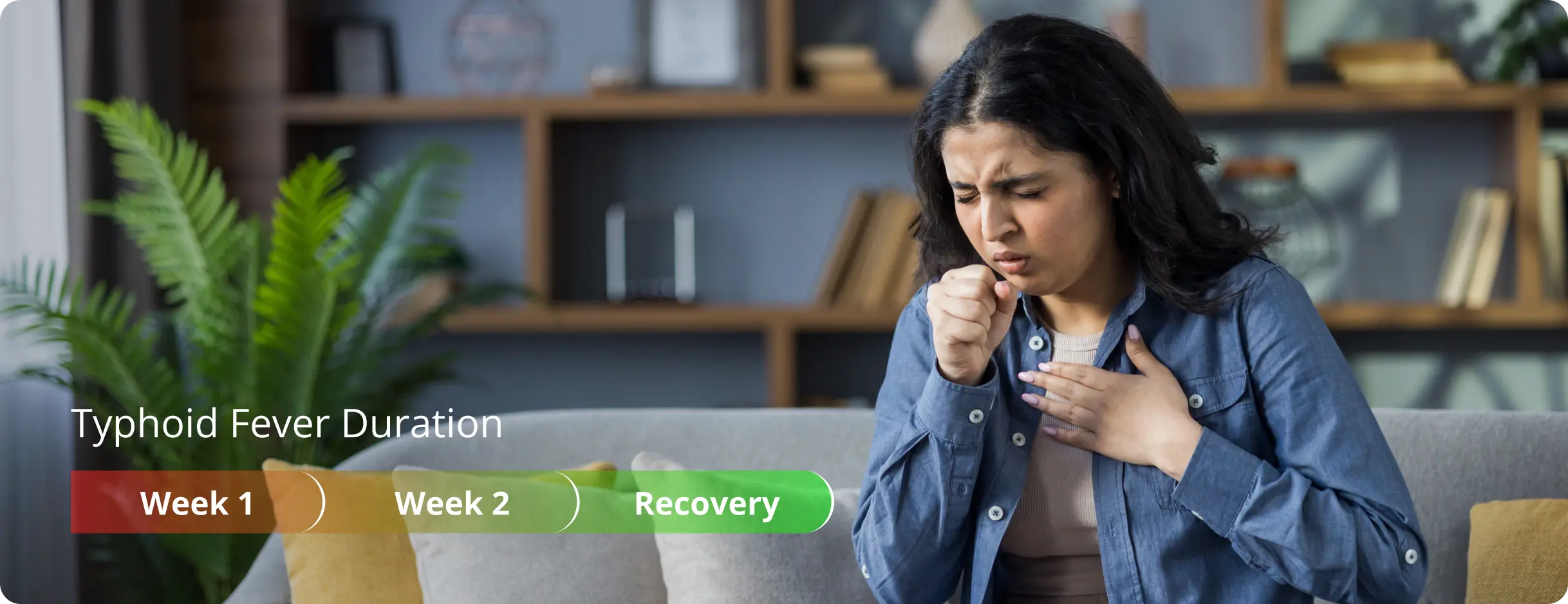
Typhoid fever is a bacterial infection caused by Salmonella typhi that spreads through contaminated food and water. Understanding the typhoid fever’s duration and what recovery typically looks like matters, as the timeline can vary based on how early you start treatment, your immunity, and how severe the infection is.[1]
What is typhoid fever?
Typhoid fever, also known as enteric fever, spreads through what is often called the 4 Fs: flies, fingers, faeces, and fomites (contaminated surfaces).[1]
Typhoid is more common in places where access to clean water and proper sanitation is limited. It can affect anyone living in or travelling to such regions.[2] Typhoid infections are seen more often in children, but adults are affected by it as well.[1]
Typhoid fever duration: How long does it last?
Typhoid duration breakdown
The incubation period, or the typhoid fever stage before the symptoms start, can last anywhere between 6 days and a month. The onset of illness is gradual, and the patient experiences fatigue and a fever that increases daily. Around the 3rd or 4th day of illness, the fever can reach between 102-104°F. Without the right treatment, typhoid fever can last up to a month.[2]
The fever often follows a pattern where it is lowest in the morning and peaks in the late afternoon or evening.[2]
Typhoid fever symptoms timeline
Typhoid fever can look like many other infections in the beginning, which is why people often mistake it for just a fever. Typhoid fever’s symptoms timeline usually begins with fever, with some other common symptoms like fatigue, loss of appetite, headache, and abdominal pain.[1]
Children may experience diarrhoea, while vomiting is more common in adults.[2] Some people (especially those with fairer skin) may also develop an occasional rash, also called rose spots.[1]
How long does it take to recover from typhoid?
How long typhoid fever lasts will depend on how soon you seek medical care. Starting the antibiotic treatment early can shorten the illness and reduce the risk of complications. The fever usually starts coming down over the next 3 to 5 days with antibiotics. Some people may feel slightly worse in the first couple of days, but this is normal as the infection is being treated.[2]
With delayed typhoid treatment, the duration of fever can be longer and lead to serious complications showing up after 2 to 3 weeks of illness. Since antibiotic resistance is also a growing concern worldwide, treatment choices should be guided by a doctor and by testing and susceptibility results.[1]
Typhoid fever treatment and its impact on the duration
Seeking medical care at the right time can make a huge difference in the severity of the illness and typhoid fever’s duration. If the fever does not settle within 5 days, doctors can consider alternate antibiotics or check for a persistent infection site.[2]
Adequate rest is just as important. Typhoid often causes intense fatigue, so your body needs time to recover and regain strength. During typhoid fever recovery, stick to freshly cooked, hygienic meals and safe drinking water. This supports healing and helps reduce the risk of spreading infection to others. In more severe cases, hospitalisation may be needed for close medical monitoring.[1,2]
Typhoid vaccination helps prevent the disease. When paired with good hygiene and safe food and water habits, it’s one of the most effective ways to protect yourself from typhoid.[2]
Can typhoid fever come back?
Yes, typhoid can come back. Relapse can occur in a small number of patients, usually 1 to 3 weeks after clinical recovery, even after completing treatment, and requires another course of antibiotics. Reinfection can also happen, which means that having typhoid once does not guarantee that you are protected in the future.[2]
Conclusion
Typhoid fever can take time to show up, build up slowly, and last longer than most people expect, especially without timely treatment. With early medical care and the right antibiotics, typhoid’s recovery time becomes much smoother and the risk of complications drops significantly. If you or someone you know has a persistent fever, don’t wait it out. Speak to a doctor early.
Ask your doctor about the typhoid vaccine as a preventive step.
FAQs
How long does typhoid fever last with treatment?
Fever typically begins to reduce within 3 to 5 days of effective antibiotic treatment.
How long does typhoid fever last without treatment?
Untreated typhoid can last up to a month, with a higher risk of complications.
How long does weakness last after typhoid?
Weakness is common because the illness is systemic, and recovery can take time with rest.
Is typhoid contagious during recovery?
Typhoid spreads through the faecal-oral route, so hygiene and handwashing remain important.
Can children recover faster from typhoid?
Recovery depends more on severity and early treatment, although symptoms can look different in children.



Resources
Disclaimer: A public awareness initiative by Bharat Biotech International Limited. This information is for general awareness only and does not constitute medical advice. The doctors, medical facilities and graphics shown are for illustrative purposes only. For any medical advice or any question or concern you may have regarding your condition, consult your doctor.