



How does poor sanitation drive typhoid spread in urban India?
Every year, typhoid fever affects lakhs of Indians, particularly those living in densely populated urban areas where clean water and basic hygiene are not guaranteed. Understanding the link between poor sanitation and typhoid in India is the first step toward breaking this cycle and protecting oneself from typhoid. The growing typhoid spread in urban India reflects broader sanitation and infrastructure challenges.
What is typhoid, and how does it spread?
Typhoid fever is caused by Salmonella typhi. Humans are the only reservoir for these organisms.[4] Typhoid spreads by the 4 Fs — flies, fingers, faeces and fomites (contaminated surfaces).[5] The disease spreads through the faecal-oral route when a person ingests contaminated food or water.[1] The most common symptoms of typhoid include a persistent fever, abdominal pain, headache, nausea and weakness. Severe cases can also lead to perforation in the gut or gastrointestinal haemorrhage.[4]
Why is urban India more vulnerable?
India carries a disproportionate share of the global typhoid burden. The impact of this disease affected cities the most, where the incidence among children was the highest.[2] In Indian urban slums, the incidence of typhoid has been reported as high as 5.1 per 1,000 children under ten years of age per year.[4] In most densely populated parts of urban India, water treatment was inadequate, leading to over a third of households sharing bathroom facilities with other families.[2] Rapid unplanned urbanisation, unsafe drinking water and lack of sanitary infrastructure continue to fuel transmission.[1] Factors such as overcrowded living conditions and shared sanitation facilities continue to increase exposure risk in urban settings.
Key ways poor sanitation spreads typhoid
Intermittent water supply and leaky pipes
A contaminated water supply and ageing infrastructure can increase the risk of water contamination in cities. Access to safe drinking water is one of the strongest protective factors against typhoid, reducing the risk of infection by half.[5] In urban areas where water supply is inconsistent or the infrastructure is not maintained properly, the risk of contamination compounds at every stage from the source to our taps, creating a community-level reservoir for Salmonella typhi.[5]
Inadequate sewage systems
Issues such as sewage leakage and poor waste management can worsen transmission. The faecal-oral route is the primary mechanism through which Salmonella typhi spreads. Inadequate sewage infrastructure is what keeps this route open in urban areas. The usage of public or shared toilets is one of the strongest predictors of typhoid risk.[1]
While open defecation and lack of basic sanitation infrastructure do amplify the risk of typhoid, the lack of hygiene practices around using washroom facilities (such as washing your hands with soap and water) is one of the biggest contributors to rising typhoid incidence.
Monsoon and flooding
While flooding and rainfall do not directly cause typhoid, they have been positively associated with the incidence of typhoid fever. When floodwaters overwhelm existing drainage problems, they contaminate drinking water sources with sewage, creating ideal conditions for Salmonella typhi to spread through communities. Climate change is expected to worsen existing public sanitation gaps, with increased flooding, drought and rising temperatures compromising food and water safety.
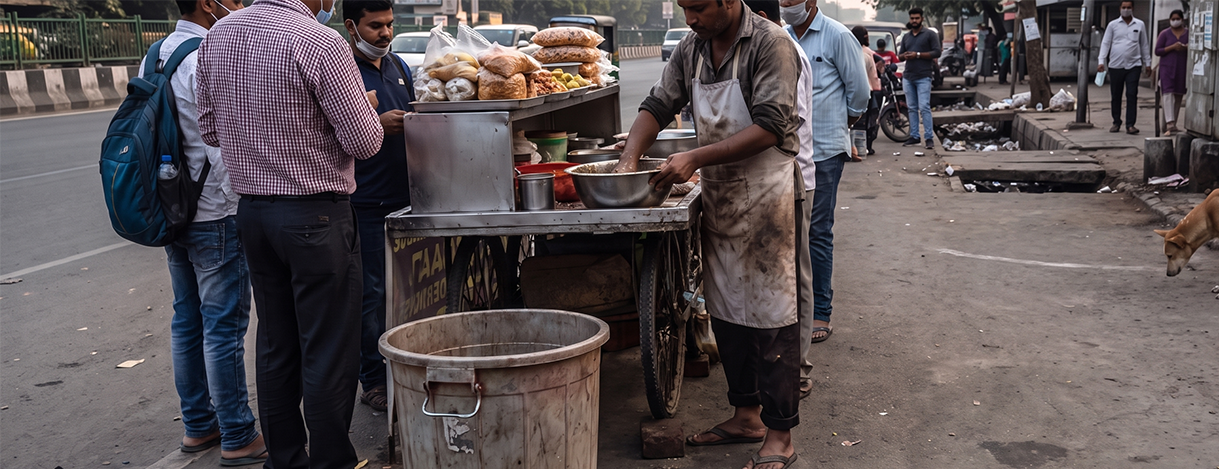
Salmonella typhi is transmitted through exposure to contaminated food, making street food a risk factor in urban India.[3,4] Food that is prepared with limited access to clean water or without washing hands carries a heightened risk of contamination. It is best to avoid food prepared in advance. Raw or undercooked foods carry the greatest contamination risk. Maintaining street food hygiene when eating outside, such as choosing freshly prepared, hot food and avoiding drinks containing ice from unknown water sources, can reduce exposure risk.[5]
Poor hygiene practices
Asymptomatic carriers
An asymptomatic carrier is a person who continues to shed the Salmonella typhi bacteria after recovering from the illness. They can unknowingly continue to spread the disease by accidentally contaminating the food or water they touch. Also known as chronic carriers, they can continue to shed the bacteria for up to 12 months. This is a source of concern, especially in spaces where washroom facilities are shared amongst many people, since infection spread in crowded areas is more likely.[5]
Impact of poor sanitation on public health
The public health consequences of inadequate sanitation extend beyond individual illness. The incidence of typhoid in households with poor WASH (water, sanitation and hygiene) conditions was nearly double when compared to households that followed the WASH protocol.[1] Addressing urban sanitation issues in India remains important for broader typhoid prevention efforts in the country.
How to prevent typhoid in urban areas
Improve Water Safety
Better hygiene practices
Behavioural change is a powerful protector against typhoid. Make sure to always wash your hands with soap and water properly after using the washroom. Handwashing is also important before preparing food, while serving food, and before eating. If you are caring for an ill person, make sure to maintain hygiene. If soap is unavailable at the moment, you can also use a sanitiser with a high alcohol percentage.[3] Consistent typhoid hygiene practices remain important for typhoid prevention in India.
Safe food choices
Since Salmonella typhi can be transmitted through contaminated food, food safety is an important part of typhoid prevention and addressing urban health challenges.[3,4] Ensure that your food is cooked properly and served hot. Daily exposure risks could include eating raw or undercooked meat, fish, shellfish, milk products, fruits and vegetables that carry a risk of contamination. Similarly, unpasteurised juices, beverages made with unfiltered water or ice, cut fruits, and salads should be avoided in settings where hygiene is uncertain.[5]
Vaccination
Vaccination is the most effective strategy for typhoid control. The WHO recommends routine immunisation in endemic countries, especially for children up to 15 years.[2] Vaccines were found to be 79% to 95% effective in the first two years after vaccination in studies covering more than 100,000 children in diverse locations.[5] Vaccination needs to be supported with good hygiene practices, since it does not preclude the need for hand hygiene and food and water precautions. The risk of other illnesses transmitted by contaminated food and water remains.[5]
Conclusion
Typhoid fever is a preventable disease that can be controlled with vaccination, WASH protocols, and better infrastructure for food and water safety. Improved toilet access, safe drinking water, household water treatment, and handwashing with soap can meaningfully reduce typhoid risk even in densely populated urban India. Protecting communities from typhoid starts with understanding the role that sanitation plays, and taking action to address it. Typhoid vaccination remains one of the best ways to keep children and adults safe from typhoid. Consult your doctor to ensure your family is protected.
FAQs
Why is typhoid common in urban areas?
Typhoid is more common in urban areas due to overcrowding, unsafe drinking water, inadequate sanitation, shared toilets, and rapid unplanned urbanisation.
How does poor sanitation cause typhoid?
Poor sanitation enables faecal contamination of food and water, allowing Salmonella typhi to spread through the faecal-oral route.
Can contaminated water spread typhoid?
Yes. Drinking contaminated water is one of the primary ways typhoid spreads, especially where water treatment and storage are inadequate.
Is street food a risk factor for typhoid?
Yes. Street food prepared with unsafe water, poor hygiene, or improper storage can increase the risk of typhoid transmission.
How can typhoid be prevented in cities?
Typhoid prevention includes vaccination, safe drinking water, handwashing with soap, household water treatment, and following WASH practices.

Resources
- Tadesse, B. T., et al. (2023). Association among Household Water, Sanitation, and Hygiene (WASH) status and typhoid risk in urban slums: Prospective cohort study in Bangladesh. JMIR Public Health and Surveillance
- John, J., Bavdekar, A., et al. (2023). Burden of typhoid and paratyphoid fever in India. New England Journal of Medicine
- Kim, C., Goucher, G. R., Tadesse, B. T., Lee, W., Abbas, K., & Kim, J. (2023). Associations of water, sanitation, and hygiene with typhoid fever in case–control studies: a systematic review and meta-analysis. BMC Infectious Diseases
- Mukhopadhyay, B., Sur, D., Gupta, S. S., & Ganguly, N. (2019). Typhoid fever. The Indian Journal of Medical Research
- https://www.ncbi.nlm.nih.gov/books/NBK557513/
Disclaimer: A public awareness initiative by Bharat Biotech International Limited. This information is for general awareness only and does not constitute medical advice. The doctors, medical facilities and graphics shown are for illustrative purposes only. For any medical advice or any question or concern you may have regarding your condition, consult your doctor.